
In the modern Construction sector, the value of a window or door frame is the result of a synergy between performance, insulation, and sustainability. In this scenario, materials play a crucial role, and thermoplastic elastomers (TPEs), particularly the TPE-S variant, are establishing themselves as the real step forward.
TPE is, in fact, the material capable of uniting high technology with the real needs of the Window and Door Frame sector, promising to redefine its standards.
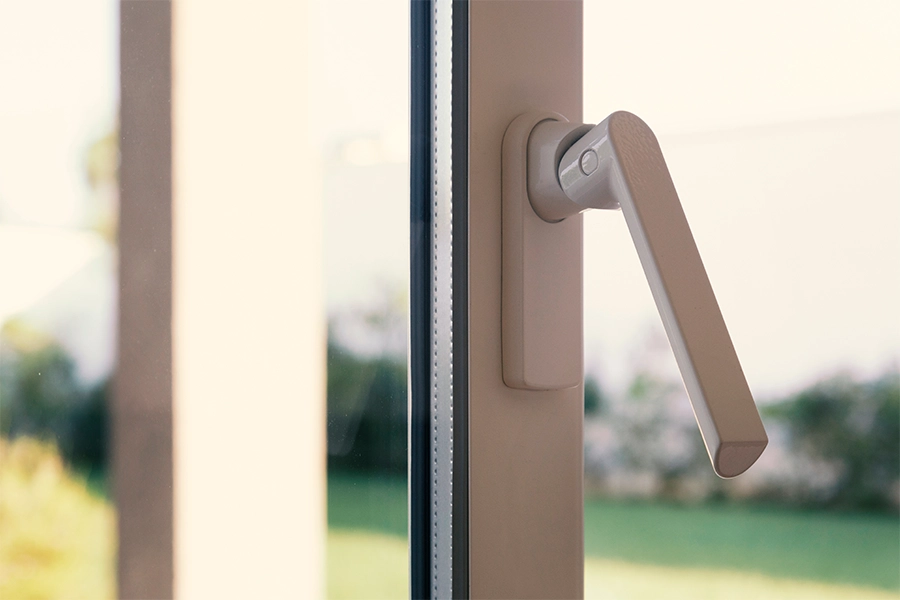 TPE-S: The alternative to PVC and EPDM rubbers for window and door frames
TPE-S presents itself as a valid alternative to materials traditionally used for sealing profiles and gaskets of window and door frames, such as PVC and vulcanized EPDM rubber. The advantages offered by this innovative thermoplastic elastomer are multiple and touch every phase, from production to disposal.
While EPDM rubbers require the complex phase of vulcanization, TPE-S boasts high processability. It can be extruded much more easily, even in co-extrusion with other rigid materials such as engineering polymers, polypropylene, and polyethylene. This allows for the creation of multi-material and complex profiles with a great possibility for customization to meet specific design and shape needs. Surprisingly, TPE-S is so similar to polyolefins that it can also be processed with standard machinery or with those designed for PVC, eliminating the need for large investments for those already active in the sector.
Furthermore, TPE-S excels for its essential mechanical properties for sealing: it guarantees a unique combination of isolation and excellent elastic recovery. This ensures that the gasket immediately regains its original shape even after years of compression, guaranteeing constant and long-lasting insulation.
Recyclability and machine care in the window and door frame sector with TPE-S
One of the most revolutionary aspects of TPE-S is its impact on sustainability and the durability of the machinery.
- Superior recyclability: Unlike vulcanized rubbers (EPDM) which cannot be recycled, TPE-S is completely recyclable. Compared to PVC, its composition also presents fewer problems related to disposal, containing a lower amount of chlorine and halogens. This opens the door to the creation of innovative materials with content from renewable sources (biobased) or with a high content of recycled material (post-consumer and post-industrial).
- Less wear on machinery: An often-underestimated advantage concerns production efficiency. The prolonged processing of materials like PVC or silicone can, in the long run, damage molding machines. Franplast’s TPE-S eliminates this problem, ensuring greater longevity and reduced maintenance of extrusion equipment. The reason lies in its chemical composition: PVC can release corrosive byproducts that attack the metals and components of the screws and cylinders of the extruder. Rubbers and silicone, while not corrosive, may require more abrasive processes or high temperatures and pressures. Conversely, TPE-S is intrinsically a non-corrosive material that processes easily at the required extrusion temperatures.
